
How Is Sea Glass Made?



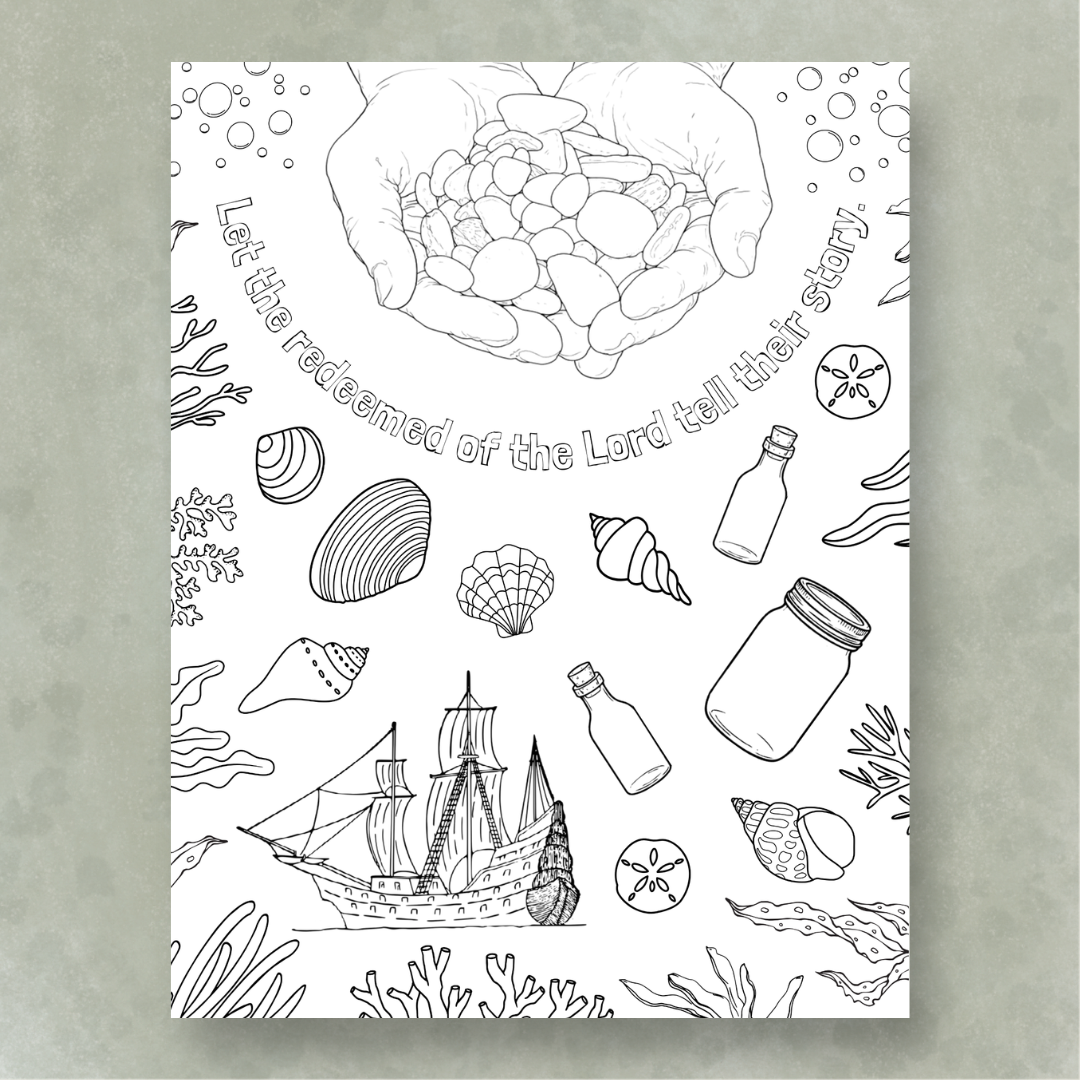
Sea Glass Coloring Sheet
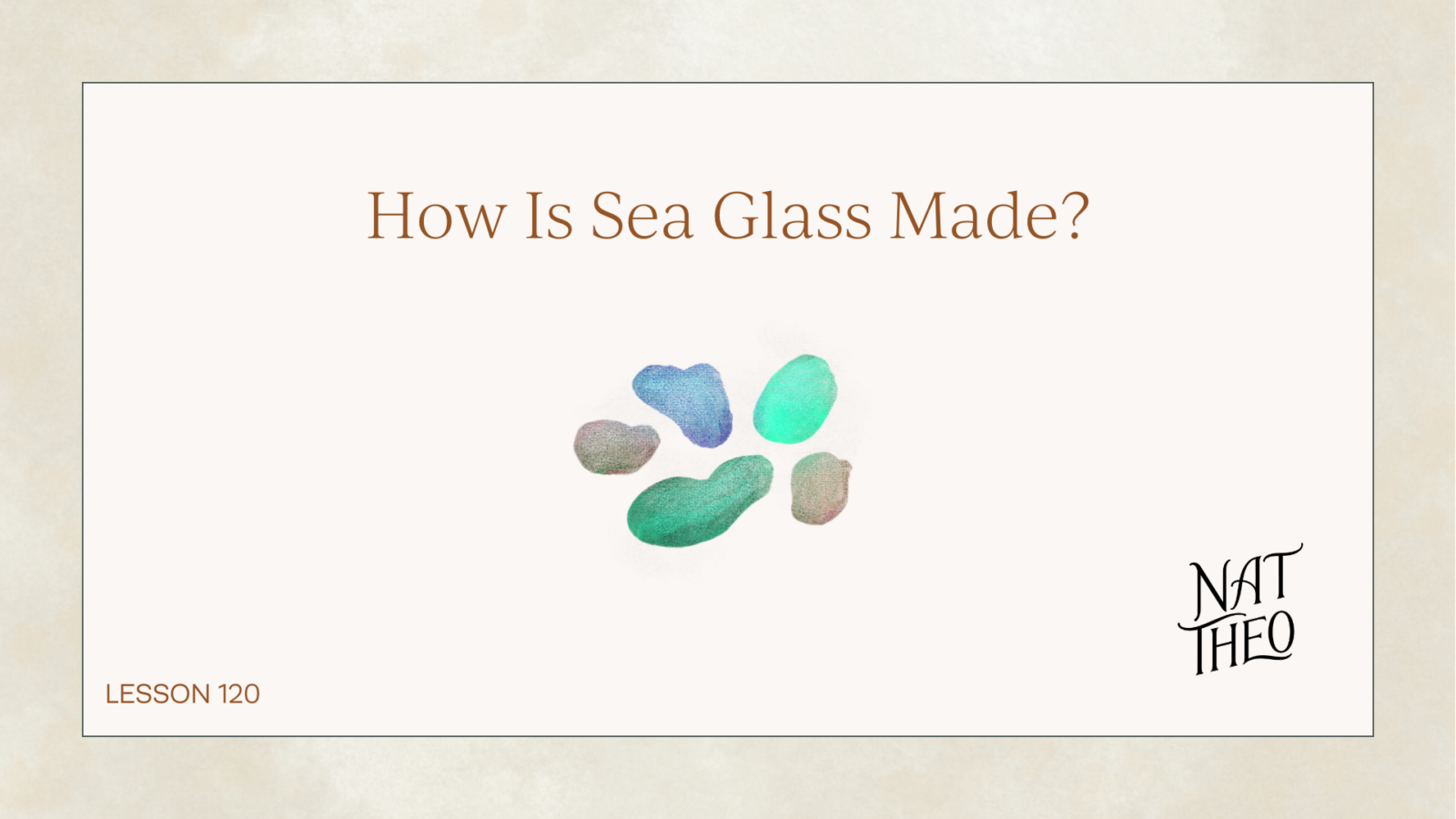
How Is Sea Glass Made?
Finding sea glass on a beach feels like a treasure hunt. One time my family visited North Beach Park in Townsend, Washington. As we walked the shore, we spotted and collected smooth, colorful pieces that looked like tiny gems. Where did they come from, and how do they get that frosty look?
How Is the Ocean Like a Rock Tumbler?
Sea glass is broken glass that has been tumbled by ocean waves over many years. As waves roll the glass around, sand and rocks rub against it and smooth it down. Over time, sharp edges disappear, and the surface becomes rounded and soft to the touch.
Sea glass often begins as glass bottles, tableware, or other glass items that were thrown into the ocean or lost in the ocean during a shipwreck. Picture a ship going down with glass bottles onboard. The glass breaks, and pieces are jostled and tumbled in the water for many years, usually 20 to 40 years.
The ocean is like a rock tumbler. Just like a rock tumbler transforms ordinary rocks into polished stones after lots of tumbling, the ocean transforms broken glass into frosty, smooth gems.
This process is a kind of weathering, which is when rocks or minerals are slowly worn down by nature through things like water, wind, or chemicals.
Why Does It Look Frosty?
It makes sense that sand and rocks would smooth sharp edges. But what makes sea glass look foggy or frosted?
As the glass tumbles, it can become rougher at the microscopic level, with tiny bumps on the surface. Those tiny bumps scatter light, making the glass look frosty instead of clear and shiny. The frosted look can also come from chemical breakdown, like salt and minerals in the ocean changing the glass.
How Is Glass Made From Sand?
Sea glass starts as glass, and glass is made from sand.
Sand is made from rocks and minerals, and it’s defined by its size. A sand grain measures from 0.0625 mm to 2 mm, about the size of a sugar crystal. Sand can be black, white, tan, yellow, brown, and even pink depending on what rocks and minerals it came from.
Sand is a main ingredient in glass, especially sand with a lot of silica. The sand is mixed and melted with soda ash and limestone. When it’s super hot and melted, it moves around like honey. Glass makers can shape it with tools, pour it into molds, or roll it flat for windows.
How Does Sea Glass Tell Stories?
Sea glass is different from fresh broken glass left on a beach. It has traveled, tumbled, and been transformed over time. When you pick up a piece, you can wonder where it came from, how far it traveled, and what it passed in the ocean before it finally washed back onto shore.
Sea glass is also becoming harder to find. More items today are made from plastic instead of glass, and there are more rules against dumping trash in the ocean. That’s good news for ocean habitats, even if it means sea glass treasures are rarer.
How Does God Write Our Stories?
Sea glass reminds us that journeys shape things. Psalm 107:2 says, “Let the redeemed of the Lord tell their story.” To redeem means to buy something back. Because of our sins, we were separated from God, but He redeemed us through Jesus.
Sea glass is shaped through years of tumbling and sanding. In a similar way, our stories may include hard chapters. Romans 5:3-5 explains that troubles can produce patience, character, and hope, and that hope will never disappoint us.
And Psalm 139:16 reminds us that God saw us as we were formed and that all our days were written in His book before we lived even one of them. If you ever hold a frosty piece of sea glass, remember this: God is writing your story, and He is a magnificent author.
Learn more on our nature podcast for kids and families:

learn more
Raising kids stirs something deep in our souls — an innate knowing that our time is finite. Taking my kids outside in creation, I’m discovering how to stretch our time and pack it to the brim with meaning. God’s creativity provides the riches of resources for teaching the next generation who He is and how He loves us. Join our adventure and discover inspiration and resources for refusing rush, creating habits of rest, living intentionally, and making the most of this beautiful life!
I'm Eryn, Master Naturalist, Author, & Bible Teacher
Hey there!
Receive free inspirational resources for refusing rush, creating habits of rest, parenting with intentionality, and teaching our kids who God is through what He has made!
Inspired
Be


The Nature of Rest
What the Bible and Creation Teach Us About Sabbath Living
Now Available!
Order
X
Signed Copy
Add a Comment