
Does a Woodpecker’s Tongue Wrap Around Its Brain?



Dung Beetle Coloring Sheet
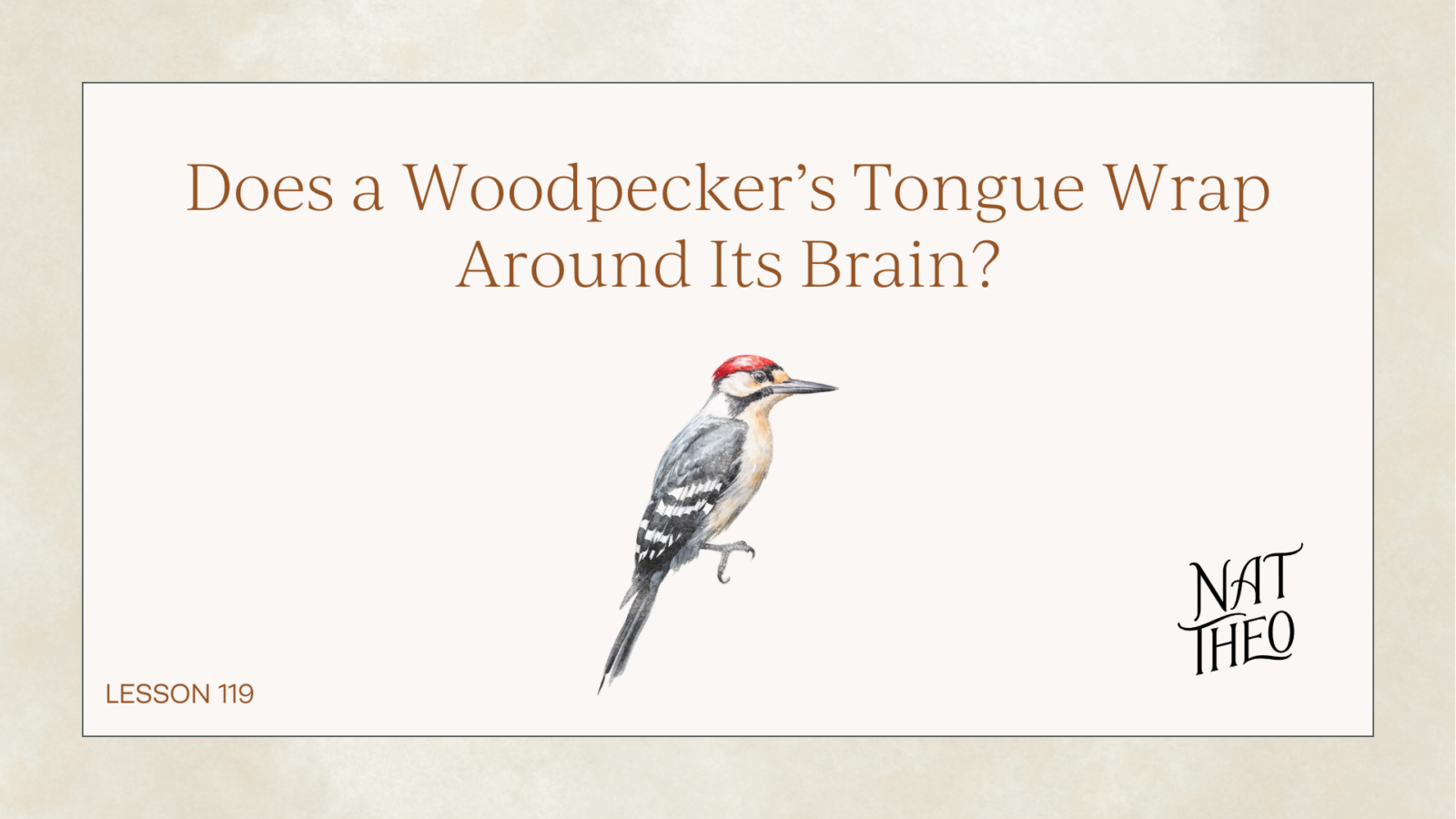
Does a Woodpecker’s Tongue Wrap Around Its Brain?
Have you ever followed the sound of pecking and found a woodpecker tapping away at a tree? I once did this high in the mountains near a lake at over 10,000 feet elevation. A small Downy woodpecker was pecking just ten feet in front of me, moving up and down the tree trunk with amazing agility.
Woodpeckers spend a lot of time pecking. That raises a big question: how do they avoid headaches or head injuries from all that impact?
And even more surprising: does a woodpecker’s tongue wrap around its brain?
Why Do Woodpeckers Peck on Trees?
Before we answer how their tongues work, let’s look at why woodpeckers peck.
Woodpeckers peck to make cavity nests inside trees.
They also peck to communicate using a loud, rapid pecking called drumming. Drumming helps attract mates and defend territory, much like songbirds use singing.
Woodpeckers also peck to find food. They eat insects and larvae hiding behind bark. They may use sight, smell, and hearing to detect insects. Once they locate a likely spot, they excavate with their sharp bill and then use their long tongue to reach deep into crevices.
Their tongues are specially designed for this work. Some are sticky and smooth. Others have barbs to snag insects. Sapsuckers even have brush-tipped tongues that use capillary action to lap up tree sap.
But with all that forceful pecking, how is the brain protected?
Does a Woodpecker’s Tongue Wrap Around Its Brain?
Yes, it does.
When a woodpecker’s tongue is not extended to catch insects, it coils up and around the back of its brain. This is possible because of a special structure called the hyoid bone.
In humans, the hyoid bone is U-shaped and sits under the jaw. It helps with speaking, swallowing, and breathing. In a woodpecker, the hyoid bone is much longer. It starts at the nostrils, splits into two arms, coils over the top and around the back of the skull, and to the mouth. The tongue slides along this long track.
This design does more than allow the tongue to extend far out of the beak. It also protects the brain.
The hyoid bone acts like a seatbelt. When a woodpecker pecks, the hyoid stabilizes the brain so it does not jostle around. It also helps absorb and spread out the impact, reducing the force that reaches the brain. Muscles around the hyoid bone further soften the shock.
So yes, a woodpecker’s tongue wraps around its brain, and that design plays a key role in brain protection.
How Are Woodpeckers Designed for Life on Trees?
Woodpeckers are also equipped with zygodactyl feet. This means they have two toes facing forward and two facing backward. This strong gripping design allows them to cling to tree trunks and even hang upside down while pecking.
Their pecking benefits more than just themselves. Woodpeckers help control insect populations and create tree cavities used by many other birds and forest animals. Nearly 20 percent of bird species worldwide depend on tree cavity nests made by woodpeckers, and in North America that number is even higher.
How Does God Shield Us From Harm?
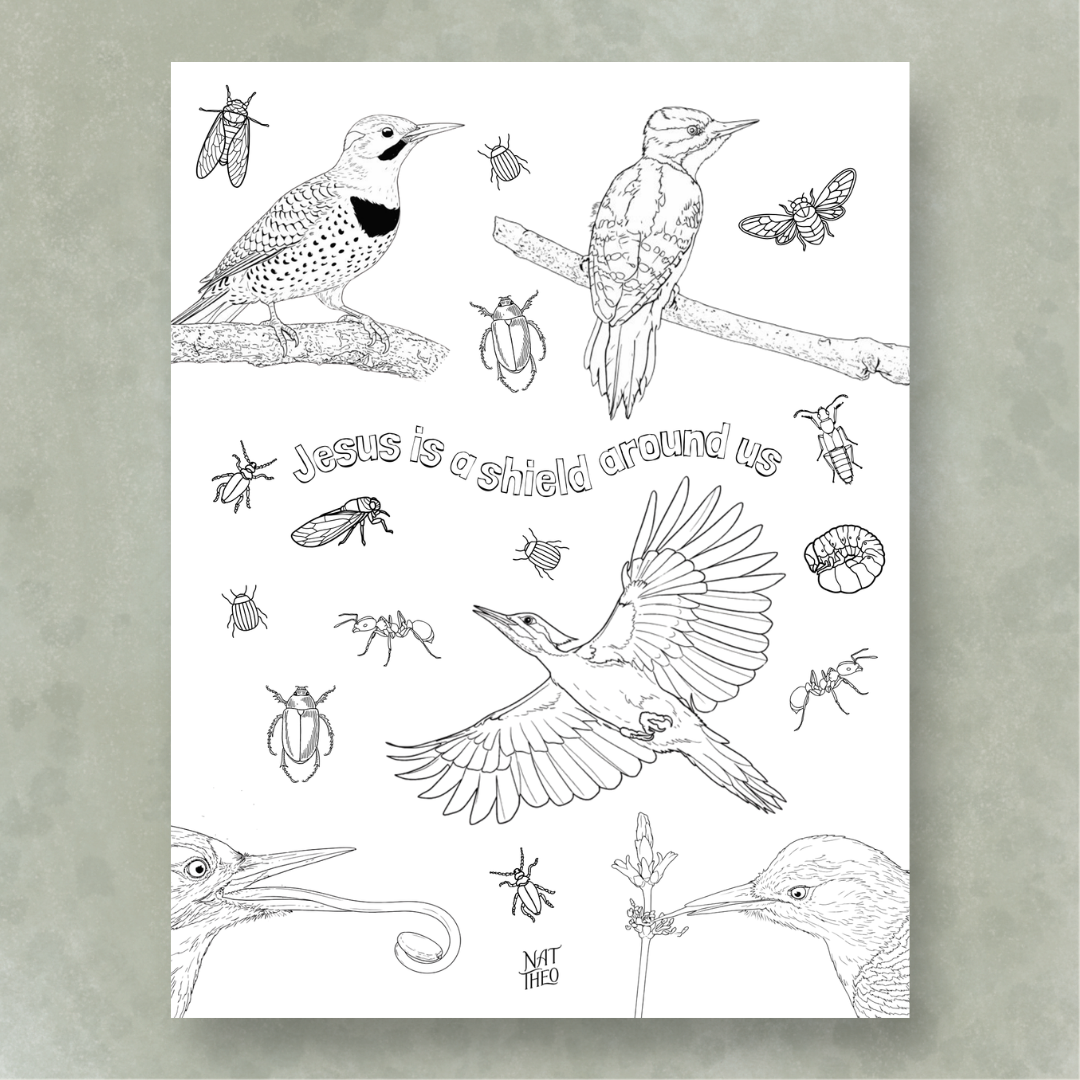
The woodpecker’s hyoid bone acts like a shield, absorbing impact and protecting its brain. Psalm 3:3 says, “But you, Lord, are a shield around me.”
Just as the hyoid bone protects the woodpecker’s brain, Jesus took the impact of our sin. Isaiah 53:4-6 reminds us that He took our suffering and was wounded for our wrongs. Second Corinthians 5:21 tells us that Christ became the offering for our sin so we could be made right with God.
A woodpecker’s brain is automatically protected by God’s design. But we must choose to accept Jesus as our shield. Romans 10:9-10 explains that when we believe in our hearts and declare that Jesus is Lord, we are saved.
The next time you hear a woodpecker pecking, remember the incredible design of its tongue and hyoid bone. And remember that God is our shield, steady and strong.
Learn more about woodpecker tongues on our nature podcast for kids and families:

learn more
Raising kids stirs something deep in our souls — an innate knowing that our time is finite. Taking my kids outside in creation, I’m discovering how to stretch our time and pack it to the brim with meaning. God’s creativity provides the riches of resources for teaching the next generation who He is and how He loves us. Join our adventure and discover inspiration and resources for refusing rush, creating habits of rest, living intentionally, and making the most of this beautiful life!
I'm Eryn, Master Naturalist, Author, & Bible Teacher
Hey there!

Receive free inspirational resources for refusing rush, creating habits of rest, parenting with intentionality, and teaching our kids who God is through what He has made!
Inspired
Be


The Nature of Rest
What the Bible and Creation Teach Us About Sabbath Living
Now Available!
Order
X
Signed Copy
Add a Comment