
Why Do Male Seahorses Have Babies?



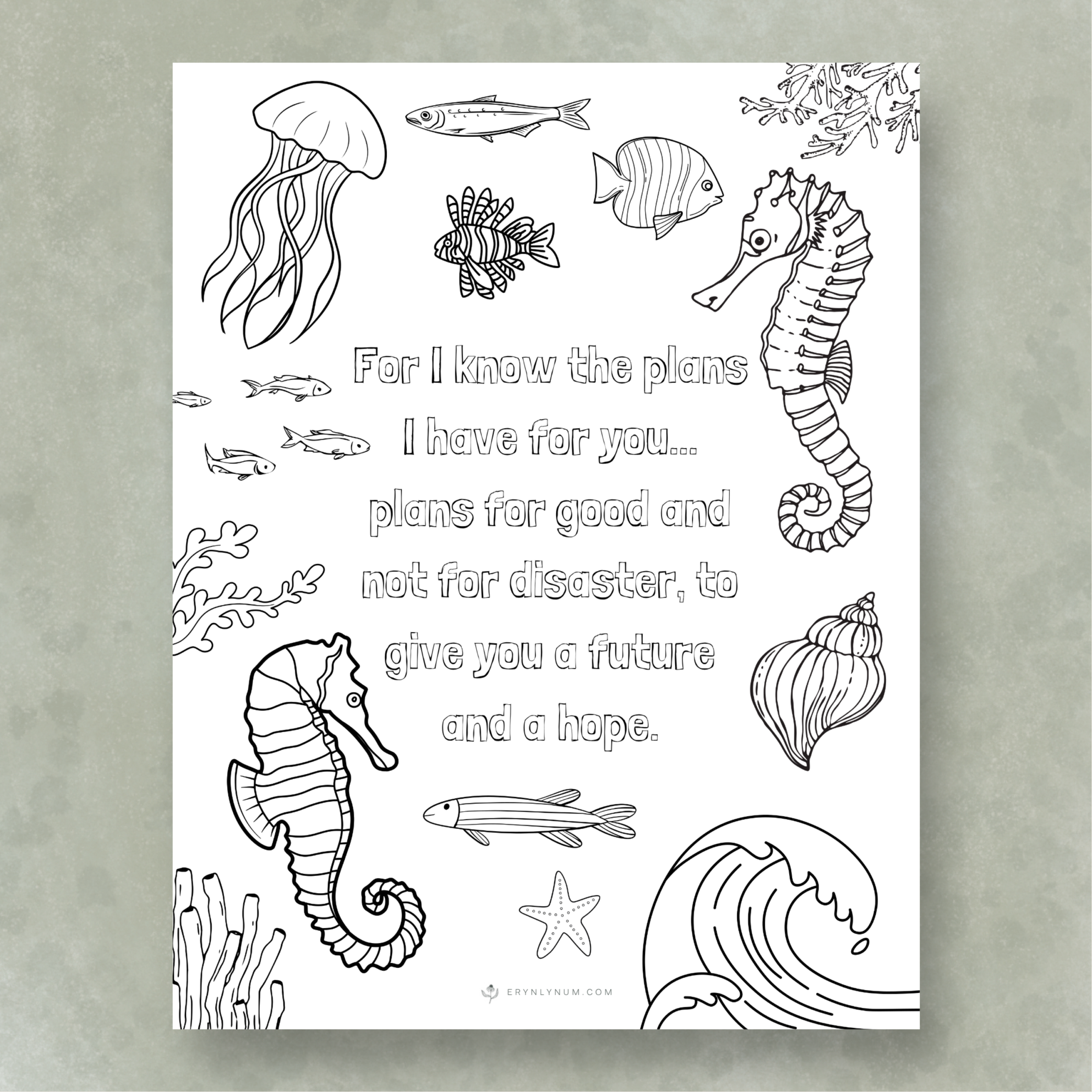
Seahorse Coloring Sheet
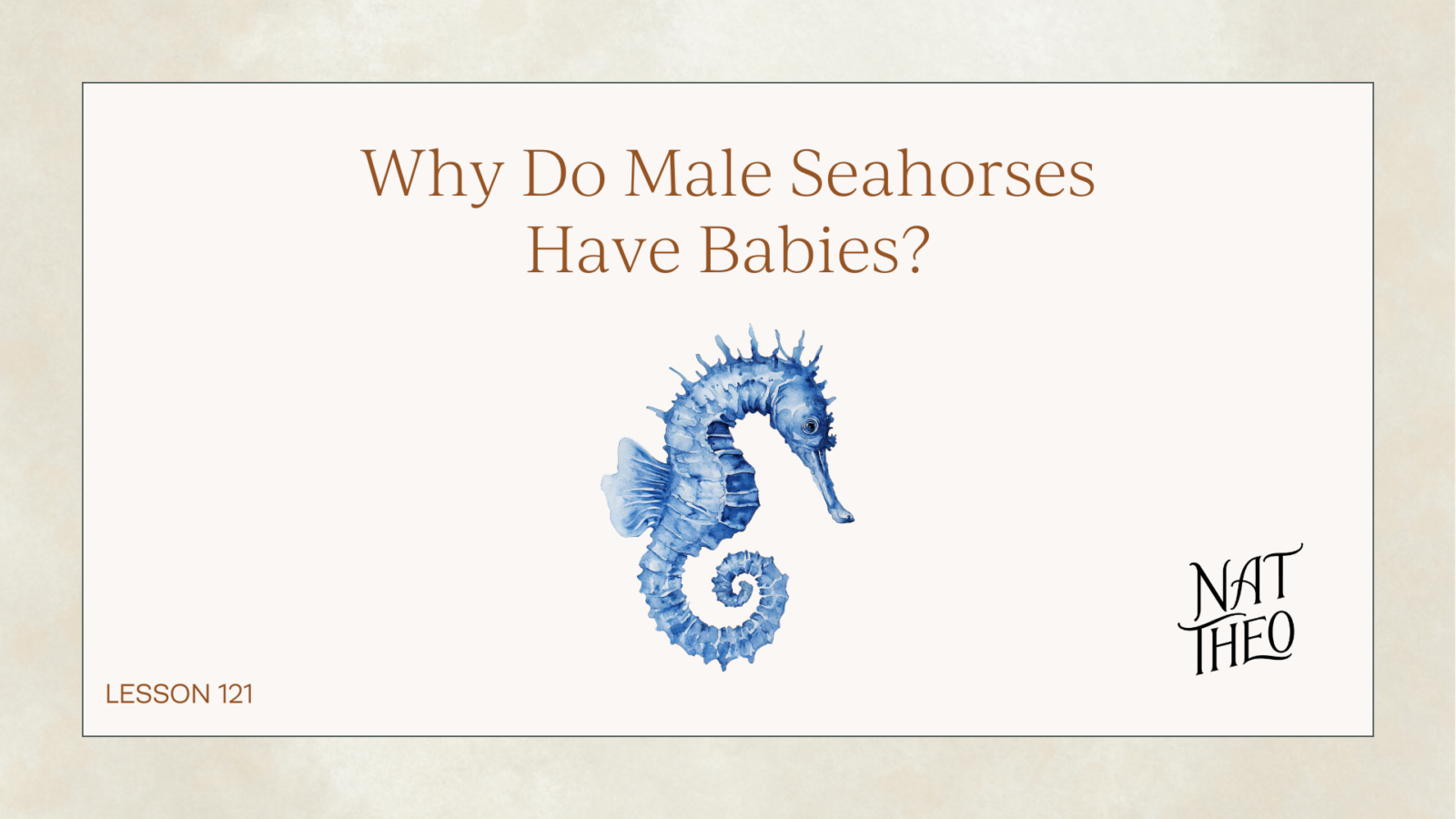
Why Do Male Seahorses Have Babies?
Seahorses are one of those ocean creatures that can stump us at first glance. They live underwater, have a long curly tail, and a head shaped like a horse. They even have a confusing nickname, but seahorses are fish, and God designed them with some of the most unusual family roles in the sea.
What Exactly Is a Seahorse?
Seahorses might look different from a goldfish, grouper, salmon, or clown fish, but they are bony fish. That means their skeleton is made of bones, unlike chondrichthyes fish like sharks and rays that have cartilage instead of bones.
Seahorses breathe through gills, swim using fins, and are cold-blooded. But they have a unique design most fish do not have. Instead of scales, seahorses have bony plates that interlock around their entire body like armor. They also belong to a small genus called hippocampus, a name that comes from a Greek word meaning “horse sea monster.” The hippocampus category only includes seahorses.
How Is a Seahorse Like a Vacuum Cleaner?
Seahorses have more surprises. They do not have teeth, and they also do not have a stomach like most creatures do. Instead, they have a simple tube-like gut, so food moves through them quickly. That is why seahorses snack all day long in the wild.
They are meat eaters and enjoy tiny creatures like plankton and small crustaceans. Their long nose and mouth work like a vacuum hose, quickly sucking up food.
Seahorses are also pivot feeders. Pivot feeding is when a seahorse snaps its head upward in a split second and creates suction that pulls prey right into its mouth. It’s so fast you might not even see it without slow-motion video.
Why Do Male Seahorses Have Babies?
This is the part that surprises most people. In seahorses, the males carry the eggs and hatch the babies instead of the females.
When a male and female seahorse are ready to have babies, they do a swimming dance together. Then the female places her eggs into a special pouch on the male called a brood pouch. The brood pouch is where the eggs stay safe while the male incubates them.
Depending on the species, a seahorse couple can have one hundred to two hundred eggs, and there are cases of over 1,000 eggs at a time.
The eggs stay in the brood pouch for around 2 to 4 weeks. When the babies are ready, the father’s muscles contract and squeeze tightly to shoot the babies out into the water. The babies come out fully formed and independent, like miniature versions of their parents. A baby seahorse is called a fry.
One reason male seahorses incubate the babies might be because it saves time and allows the couple to have more babies. While the male incubates one set of eggs, the female can begin getting ready to lay more eggs.
How Does the Brood Pouch Prepare Seahorse Babies?
The brood pouch does more than protect the eggs. While the eggs are inside, the water in the pouch slowly changes to be more like the water outside in the ocean. That way, when the babies are suddenly launched into the sea, the change is not as shocking.
How Does God Prepare Us for Growing Up?
The brood pouch is a beautiful picture of preparation. Just as a dad seahorse’s brood pouch helps his babies get ready for life outside, God prepares us for what is ahead.
Psalm 139:16 says, “You saw my body as it was formed. All the days planned for me were written in your book before I was one day old.” God knows every chapter of your life, and He is preparing you for each one.
Jeremiah 29:11 reminds us that God’s plans are for good and not for disaster, to give you a future and a hope. And Psalm 43:10 gives a simple prayer for growing up in His ways: “Teach me to do what you want, because you are my God. Let your good Spirit lead me on level ground.”
Learn more about seahorses on our nature podcast for kids and families:

learn more
Raising kids stirs something deep in our souls — an innate knowing that our time is finite. Taking my kids outside in creation, I’m discovering how to stretch our time and pack it to the brim with meaning. God’s creativity provides the riches of resources for teaching the next generation who He is and how He loves us. Join our adventure and discover inspiration and resources for refusing rush, creating habits of rest, living intentionally, and making the most of this beautiful life!
I'm Eryn, Master Naturalist, Author, & Bible Teacher
Hey there!

Receive free inspirational resources for refusing rush, creating habits of rest, parenting with intentionality, and teaching our kids who God is through what He has made!
Inspired
Be


The Nature of Rest
What the Bible and Creation Teach Us About Sabbath Living
Now Available!
Order
X
Signed Copy
Add a Comment